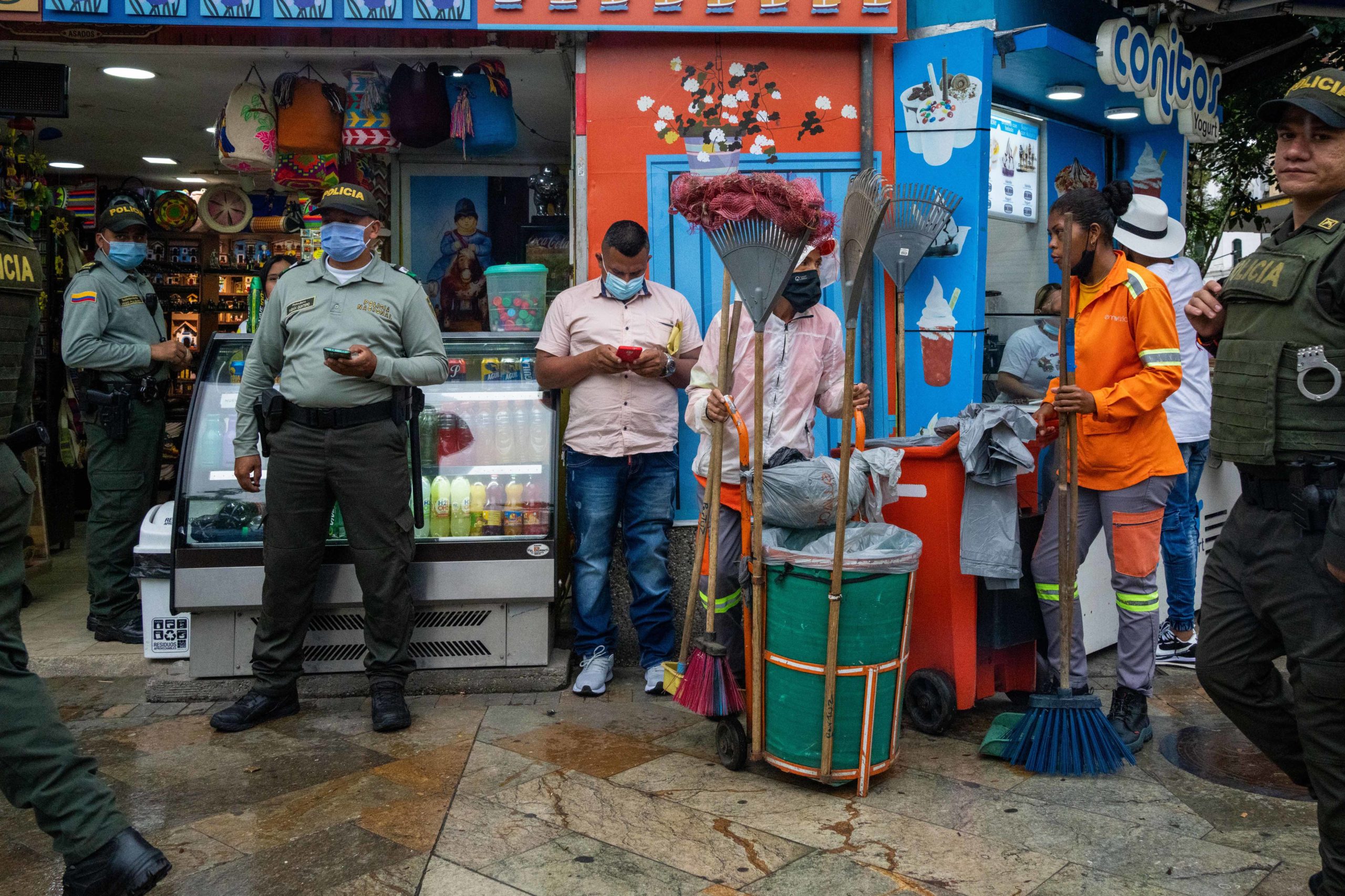
The surveillance cameras of Colombia’s police are no match for the hundreds of “eyes” employed by street gangs
The sound of a siren broke the stillness of the second night of the new year. A city surveillance helicopter operated by the National Police hovered over the foothills of western Medellín, raking a beam of light over rooftops. Were they after someone? Was there an emergency? The media reported nothing about it. Perhaps it was just a security drill.
Special series
This is the first in a series of multimedia collaborations on the evolving system of surveillance in medium-size cities around the world by photographers at Magnum Photos, data geographers at the Edgelands Institute, an organization that explores how the digitalization of urban security is changing the urban social contract, and journalists and essayists commissioned by Coda Story.
We’ll be bringing you stories from cities around the world, next up: Geneva, Nairobi and Singapore.
The Hawk, as authorities call it, is a U.S.-made Bell 407 and has been flying over Medellín since May 2017. Replete with high-tech features, the helicopter is worth close to $2 million. It is meant to monitor the city from the air, to bring people a sense of security. Residents of the valley where Medellín is nestled greet the Hawk with good humor.
At night, as it passes over areas where hundreds of people congregate to enjoy themselves, the reaction to the Hawk is almost festive: people raise glasses of beer, cigarettes and joints in mock salute. They poke fun at the ineffectiveness of the machine. “From so high up, it’s hard to control what happens on the streets,” some say.
The people who actually watch what happens on the streets also make fun of the Hawk. It is these watchers, not the cops, who are effectively in charge of urban surveillance. With dozens of “eyes” placed in strategic locations, they scrutinize the crowds, particularly around the city center. Their goal is to stop their enemies and the government from harming the businesses they defend, especially the illegal ones.
The surveillance cameras of Colombia’s police are no match for the hundreds of “eyes” employed by street gangs
The sound of a siren broke the stillness of the second night of the new year. A city surveillance helicopter operated by the National Police hovered over the foothills of western Medellín, raking a beam of light over rooftops. Were they after someone? Was there an emergency? The media reported nothing about it. Perhaps it was just a security drill.
Special series
This is the first in a series of multimedia collaborations on the evolving system of surveillance in medium-size cities around the world by photographers at Magnum Photos, data geographers at the Edgelands Institute, an organization that explores how the digitalization of urban security is changing the urban social contract, and journalists and essayists commissioned by Coda Story.
We’ll be bringing you stories from cities around the world, next up: Geneva, Nairobi and Singapore.
The Hawk, as authorities call it, is a U.S.-made Bell 407 and has been flying over Medellín since May 2017. Replete with high-tech features, the helicopter is worth close to $2 million. It is meant to monitor the city from the air, to bring people a sense of security. Residents of the valley where Medellín is nestled greet the Hawk with good humor.
At night, as it passes over areas where hundreds of people congregate to enjoy themselves, the reaction to the Hawk is almost festive: people raise glasses of beer, cigarettes and joints in mock salute. They poke fun at the ineffectiveness of the machine. “From so high up, it’s hard to control what happens on the streets,” some say.
The people who actually watch what happens on the streets also make fun of the Hawk. It is these watchers, not the cops, who are effectively in charge of urban surveillance. With dozens of “eyes” placed in strategic locations, they scrutinize the crowds, particularly around the city center. Their goal is to stop their enemies and the government from harming the businesses they defend, especially the illegal ones.