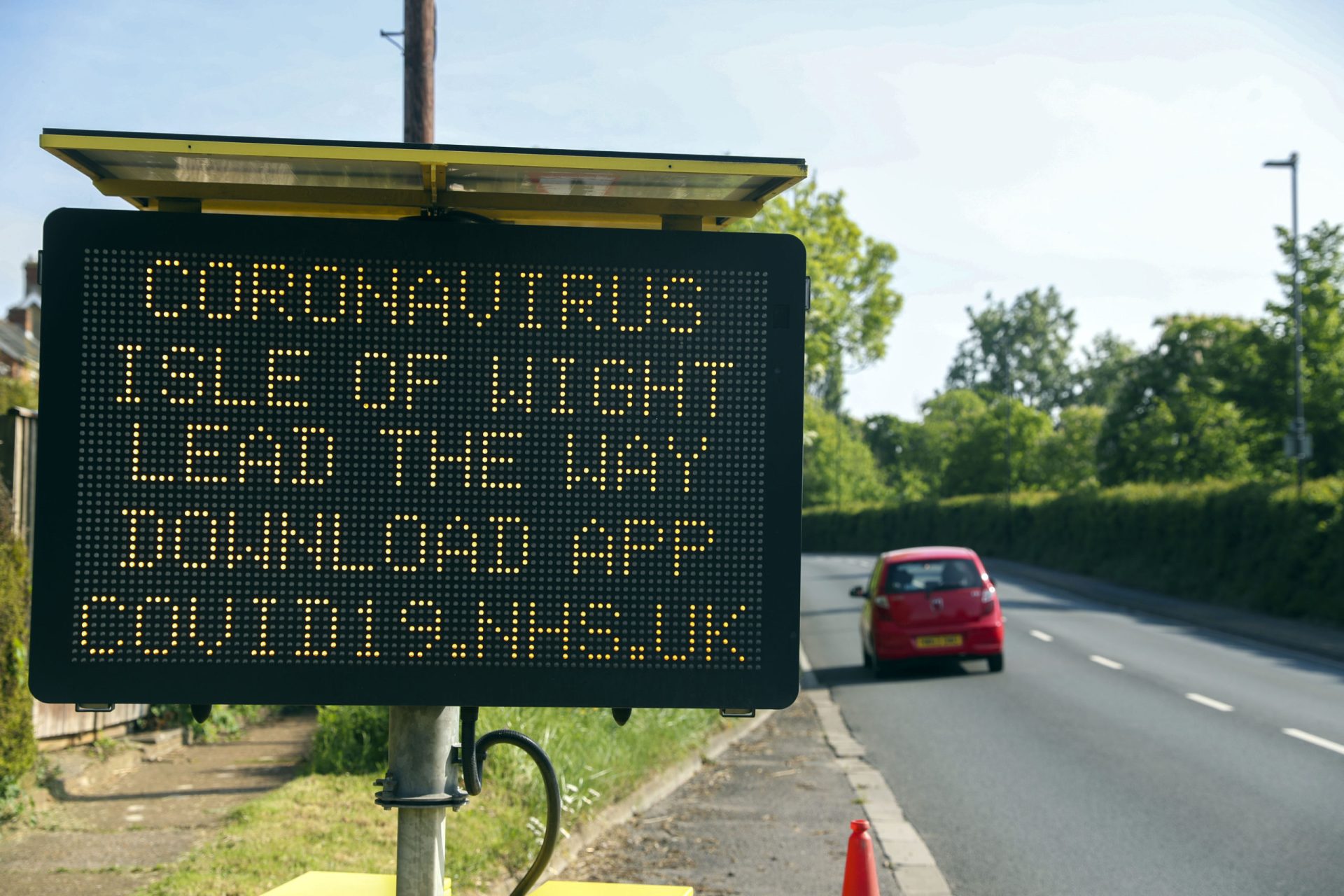
When the British government announced last month that it would trial its new coronavirus app on the Isle of Wight, the small island off the south coast of England where I live, there were immediate concerns about our privacy and data protection.
In our local newspaper, the County Press, Isle of Wight Councilor Andrew Garrett said that the app, which aims to track and trace Covid-19 cases, should be “ethical” and called for more information about “what is being tested, collected and stored.”
The government has chosen to trial the app, NHS Covid-19, on an island since its results are more easily studied in a small population of 140,000 people. If successful, the app will be rolled out across the rest of the UK.
The latest figures on the Isle of Wight show 177 cases of Covid-19 and 47 deaths. While the numbers are small in comparison to other UK regions, our tourism industry has shut down and thousands of businesses have closed. Apart from an hour of daily exercise, I have only left my home just once every 10 days, to go shopping. Across the island, marinas are closed, seaside attractions shuttered and beaches are almost deserted.


