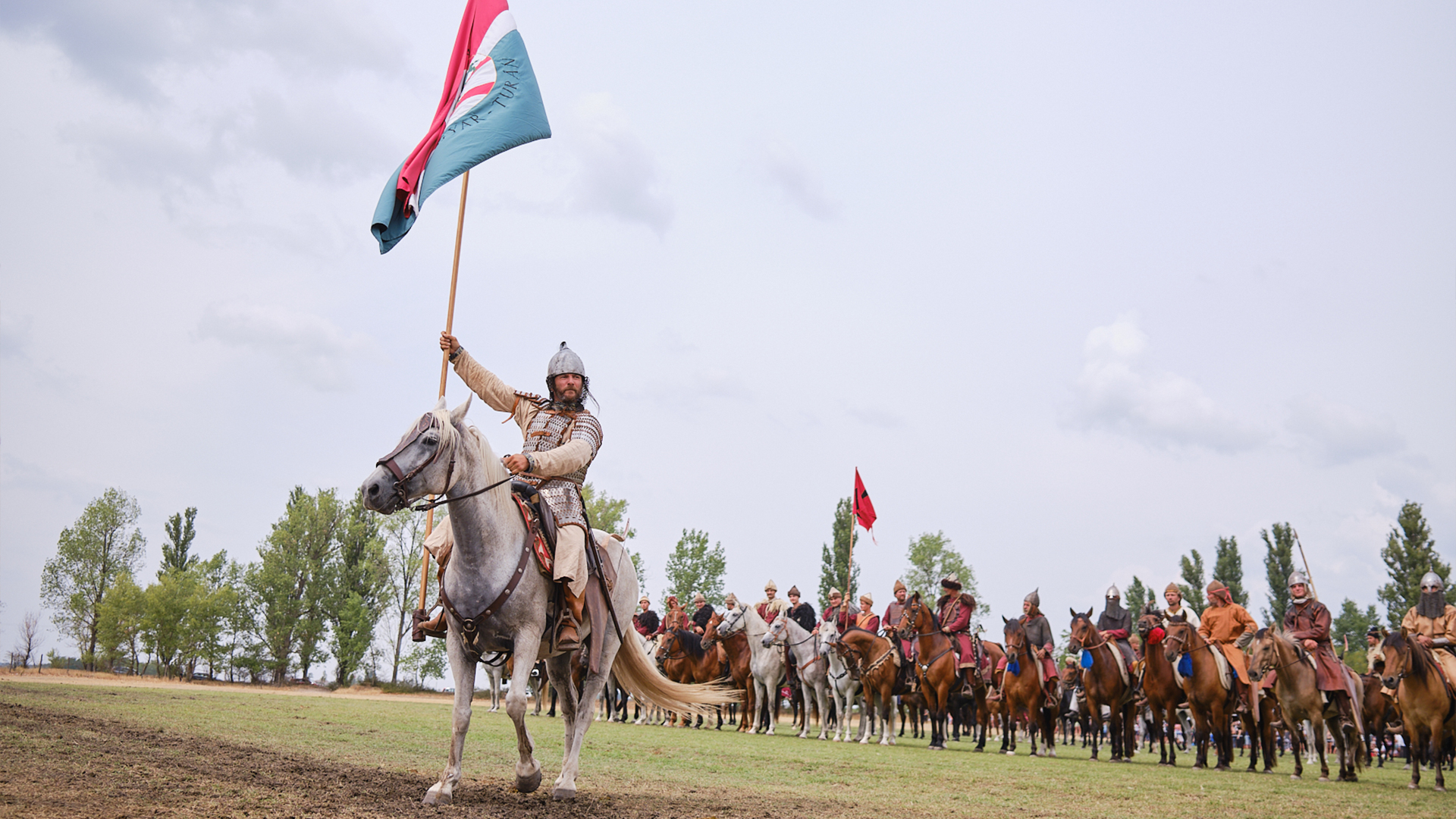
Only if you’re lucky, will you catch a glimpse of him. He swoops in and then disappears, now giving his blessing to newlyweds at a sunrise shaman wedding, next whispering in the ear of Hungarian Prime Minister Viktor Orban’s loyal allies. Moments later, he reappears on horseback, trotting by in a procession of horsemen in medieval garb — Hungarian flag in hand, his long black hair tied in a low ponytail, — to greet high profile guests from Turkey, Azerbaijan and Central Asia.
The Big Idea: Age of nostalgia
Infatuation with a mythologized history has overtaken communities, cultures, entire regions, sending society and identity into a fun-house mirror of nostalgic reflections. This special issue brings you stories of people finding solace in pasts imagined and grieving for futures foreclosed in a time of existential threats.
Nostalgia has both been harnessed for political ends and become its own political force, electrifying powerful currents of populism, jingoism, and longing for dynastic rule. It also reaches deep into the crevices of human feeling — in kitchen table conversations and on TikTok alike — leading to a thickening of anger, loss, and sadness.
Andras Biro is the master of ceremonies for a biennial gathering, in Hungary, of 27 Turkic-speaking tribes called Kurultaj. It is where the right-wing government is promoting a policy of redefining itself as part of the Eastern world. Wrapped in a heavily embroidered silk robe, Biro is the leading ideologue of Hungary’s spin on ethno-nationalism: it asserts that the nation’s true roots are not in a Christian Europe but with Turkey and among the Turkic-speaking people of Central Asia, the descendants of the Huns.
Once banned under communism and pushed to the margins of the far right, this alternative history — known as Turanism — is being revived by the Hungarian government at the highest levels. Some of the central claims of Turanism have already made their way into Hungary’s national school curriculum, presenting an alternative Hungarian origin story. For Orban, Turanism has provided a convenient ideological basis for turning away from the EU and promoting closer ties with authoritarian regimes in Central Asia and with Turkey. In November, he said that “Hungarians are the only Eastern people left in Europe.”
Kurultaj's master of ceremonies: Andras Biro.
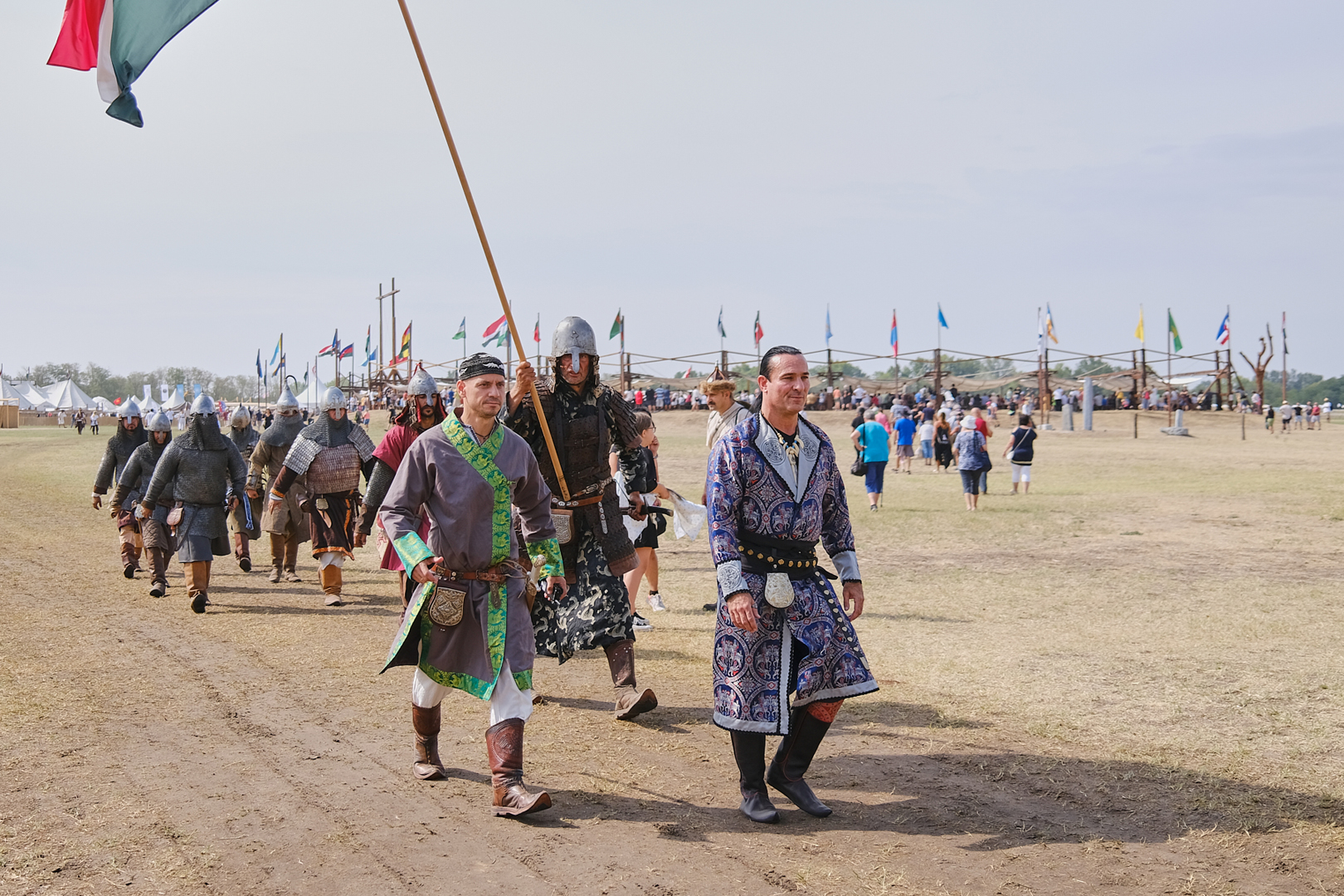
The Kurultaj gathering is a mecca for this anti-establishment movement. The festival is financed by the government and designed for a family-friendly weekend. Kurultaj draws pilgrims from across the political spectrum to a scorching semi-desert in Hungary’s south. Right-wing historians, LARPers, horse-lovers, uniformed members of the banned Hungarian Guard, eco-activists, committed neo-Nazis, yogis and families from the suburbs mill around a vast, dusty field with hundreds of delegates from Central Asia, Turkey and the Caucasus.
Only if you’re lucky, will you catch a glimpse of him. He swoops in and then disappears, now giving his blessing to newlyweds at a sunrise shaman wedding, next whispering in the ear of Hungarian Prime Minister Viktor Orban’s loyal allies. Moments later, he reappears on horseback, trotting by in a procession of horsemen in medieval garb — Hungarian flag in hand, his long black hair tied in a low ponytail, — to greet high profile guests from Turkey, Azerbaijan and Central Asia.
The Big Idea: Age of nostalgia
Infatuation with a mythologized history has overtaken communities, cultures, entire regions, sending society and identity into a fun-house mirror of nostalgic reflections. This special issue brings you stories of people finding solace in pasts imagined and grieving for futures foreclosed in a time of existential threats.
Nostalgia has both been harnessed for political ends and become its own political force, electrifying powerful currents of populism, jingoism, and longing for dynastic rule. It also reaches deep into the crevices of human feeling — in kitchen table conversations and on TikTok alike — leading to a thickening of anger, loss, and sadness.
Andras Biro is the master of ceremonies for a biennial gathering, in Hungary, of 27 Turkic-speaking tribes called Kurultaj. It is where the right-wing government is promoting a policy of redefining itself as part of the Eastern world. Wrapped in a heavily embroidered silk robe, Biro is the leading ideologue of Hungary’s spin on ethno-nationalism: it asserts that the nation’s true roots are not in a Christian Europe but with Turkey and among the Turkic-speaking people of Central Asia, the descendants of the Huns.
Once banned under communism and pushed to the margins of the far right, this alternative history — known as Turanism — is being revived by the Hungarian government at the highest levels. Some of the central claims of Turanism have already made their way into Hungary’s national school curriculum, presenting an alternative Hungarian origin story. For Orban, Turanism has provided a convenient ideological basis for turning away from the EU and promoting closer ties with authoritarian regimes in Central Asia and with Turkey. In November, he said that “Hungarians are the only Eastern people left in Europe.”
Kurultaj's master of ceremonies: Andras Biro.
The Kurultaj gathering is a mecca for this anti-establishment movement. The festival is financed by the government and designed for a family-friendly weekend. Kurultaj draws pilgrims from across the political spectrum to a scorching semi-desert in Hungary’s south. Right-wing historians, LARPers, horse-lovers, uniformed members of the banned Hungarian Guard, eco-activists, committed neo-Nazis, yogis and families from the suburbs mill around a vast, dusty field with hundreds of delegates from Central Asia, Turkey and the Caucasus.