
On the evening of Thursday, April 28, Russian tanks and other military hardware flying red flags and decorated with the recurring orange and black stripes of the St. George Ribbon appeared on the streets. That night tanks rolled, soldiers marched, and rocket launchers shuddered their way through city streets in a remarkable demonstration of military might.
This was not part of the Russian Federation’s renewed assault on the Donbas and eastern Ukraine, but rather the extensive rehearsals for the May 9 Victory Day parades. This year the Russian state has invested its annual commemoration of Soviet victory in the Second World War — its statement of military might — with additional significance. Video clips of the rehearsals in Moscow and St. Petersburg circulated on social media. Spectators posed for photographs and videos, Russian press agencies circulated videos and details of the rehearsals on their telegram channels, western news outlets shared footage. Preparations for Moscow’s parade began much earlier. By April 19 soldiers were already pounding the parade ground in Albino, a small rural town outside Moscow.
In the late Soviet era details of Victory Day parades were closely guarded secrets. But in 2022 the Russian Ministry of Defense released detailed plans of the parade order, including the units, weapons, and aircraft involved. Victory Day preparations can be followed more closely than ever before.
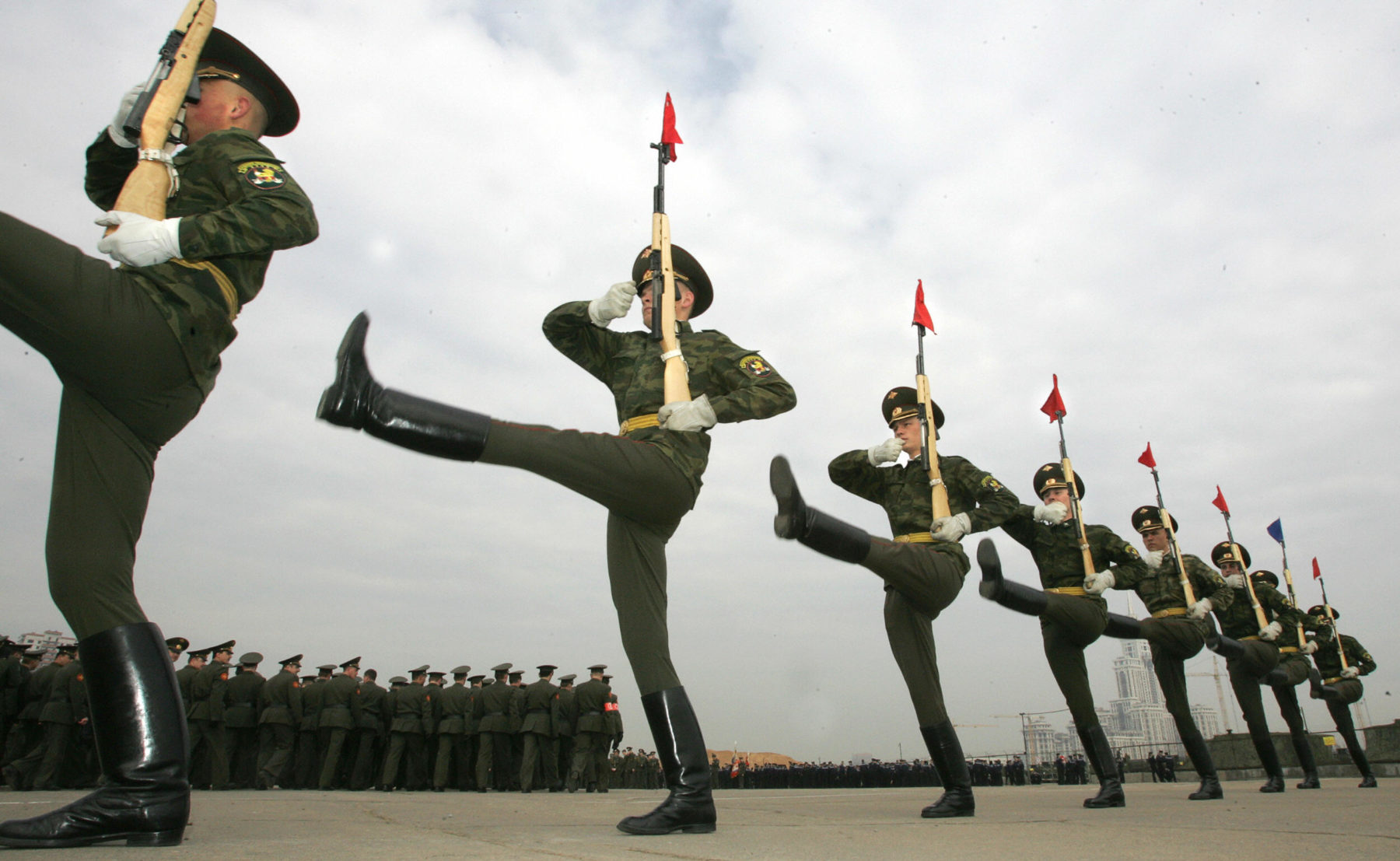
The centrality of May 9 in the Russian national calendar and consciousness seems well established, an almost inviolable moment in Russian public life. In April 2020, at the height of the coronavirus pandemic, preparations for the 75th anniversary of the Second World War’s end continued. The rehearsals of nearly 15,000 soldiers tightly packed on the Albino military proving ground were memorably captured in a video, featuring some expressive Russian swearing, which went viral on social media. The parade was not canceled but rather postponed for two months.


